
Do you know all the parts of a college research paper? One of the most significant parts of academic success is making sure you write all the research paper elements in the correct order. Writing a college research paper can be challenging, but understanding its structure makes the process smoother. A well-organized research paper not only ensures clarity but also demonstrates your academic rigor. This guide covers the 12 essential parts of a research paper, providing detailed insights to help you craft a thorough and well-structured academic document.
Why Structure Matters in a College Research Paper
The structure of your research paper is crucial because it helps to:
- Organize your thoughts and ideas logically.
- Demonstrate your understanding of the subject.
- Present findings clearly and coherently.
- Align with academic standards (APA, MLA, etc.).
Each part of your paper serves a specific purpose, contributing to the overall impact of your research.
The writing presentation, as well as the style, varies depending on the educational field. Stick to academic formats like the APA or MLA styles when writing a scientific paper.
A scientific college research paper typically consists of several key parts. The introduction provides background information and a thesis statement, setting the stage for the research. The literature review summarizes existing knowledge, while the methodology section explains the research design and procedures used.
The results section presents the findings, followed by the discussion section, where the results are interpreted and implications are discussed. Finally, the conclusion summarizes the main points and highlights the significance of the research.
Parts of a College Research Paper
Whether writing a B.S. degree research paper or finalizing a research report for your psychology course, organizing your research paper according to the American Psychological Association (APA) guidelines will be best. Below are some instructions for every part of a research paper.
Research Paper Outline
- Cover page/ title page
- Abstract
- Definition of Terms
- Introduction
- Limitations of the study
- Methodology
- Literature review
- Results
- Argument
- Conclusion
- References
- Appendices
Apart from the above parts, some research papers will need you to write additional parts like;
- Table of contents
- Acknowledgments
1. Cover/ Title page
The title page is the first part your supervisors see in your research paper. Therefore, you should spend your time making it look professional and steady.
You must learn how to write and format your research paper’s title page, especially when you want to create an excellent first impression of your document. The cover page is the first page of your research paper containing the following information:
- The title
- Your official names
- Institution name
- Course type
A step-by-step guide to help you create a perfect research paper title page
- Begin by writing the title a third way down on the document. The paper’s heading should be lined up at the center of the page.
- Write your full official name and avoid including any title before or after your name. Also, consider including the names of other people who did the research with you, enter the group members’ names, and remember to separate them using a comma.
- Write the full name of your institution. If people from diverse institutions did the research, including the names of their institutions after their names.
- Lastly, type the course name and remember to include the course code. You can add the date of submission, but this is elective. If you decide to include the submission date, do so after the course title.
Rules to be Followed While Formatting your Title Page
Regardless of your formatting style, some basic rules must be followed when writing your cover page. To write a well-written cover page, you must adhere to the following rules:
- Always ensure the entire text on the page is lined up in the middle. Additionally, double-space your work and the border at one inch on both sides.
- Your work must be legible and well-ordered. Consider using a clear and legible font type for your texts.
- Use proper capitalization throughout your cover page. Use lowercase only when writing prepositions and conjunctions.
- Number your work when writing your research paper, including the cover page. Include a running head on the upper right hand of the page and the page number of the upper left part of the page.
- Ensure that your title is concise and significant to the content of your research paper. Avoid using unnecessary words that are not connected to the content of your document. The title should be eye-catching and attract your readers to the research paper.
2. Abstract
The abstract of your research paper should not be more than 250 words. In some cases, it can be shorter than that. It should be a single-paragraph summary of the whole research. The abstract is part of your document that will help the reader determine what is interesting about the study. The abstract should include and specify the following:
- Problem being studied
- The purpose of the research
- Methodology
- Substantial findings
- Implications of the results
3. Definition of Terms
In this section, you define some significant key terms you will refer to in your research paper. This can include your variables and related terms. Most of the terms or their variants should also be in the title of your research paper.
4. Introduction
The introduction is the first significant part of your research paper. It usually describes the investigated topic and discusses or reviews the relevant points. This is the part where you should provide a basis for the purpose and significance of the research.
It should also present a suggestion that tries to answer all the significant questions. The research paper introduction should also give historical information about the problem studied and mention other studies that have found applicable findings.
Finally, the introduction should summarize the state of the main question following the study’s end.
5. Limitations of the Study
Limitations of your research are the limits and restraints on your study method and the investigation process. Every research must have its limits, and if you want your work to be precise, you must include the research limitations. When writing the limitations:
- Recognize the limitations of your study in advance before someone else does it.
- Remember that your study’s limitations or flaws can allow you to continue with your research. On the other hand, admitting weaknesses shows your critical scrutiny skills.
- Additionally, you must know that claiming limitations is a personal process since you must assess the effects of the listed limitations.
6. Methodology
This section of your research paper will detail how the research was done. You must indicate the subjects involved in the study’s design, the materials used, and the study technique.
The methodology part is essentially the most crucial part of the research paper. Ideally, it gives the readers a chance to appraise the quality of the research and offer the details by which another study may duplicate and legalize the results.
In this section, you should discuss the method you used for your research; did you employ quantitative or qualitative research methods?
Did you give people inquiry forms? Were any field research studies conducted? What method did you use to collect data? It is essential to note the methodology used will depend on the type of field and the experiment type.
7. Literature Review
Your research should be premised on prior knowledge about studies on your selected topic. In this section, you analyze various sources relating to your research. Try to focus on peer-reviewed articles and books from reputable experts in the field.
While identifying the strengths of your source, be sure to mention the research gap you are trying to resolve in your research paper. Remember to mention the strengths and weaknesses of the sources you are reviewing, including their ethical considerations.
8. Findings/ Results
This is the most flexible part of a research paper. This section aims to provide your findings, without explanation, in a systematic and reasonable order. You can use descriptive materials, like tables and figures or texts.
Start your results section with texts and refer to your figures and tables as you continue.
If you used a quantitative research method, the finding must exhibit mathematical results and data.
Qualitative research methods will require you to comprehensively discuss trends without going into so many facts.
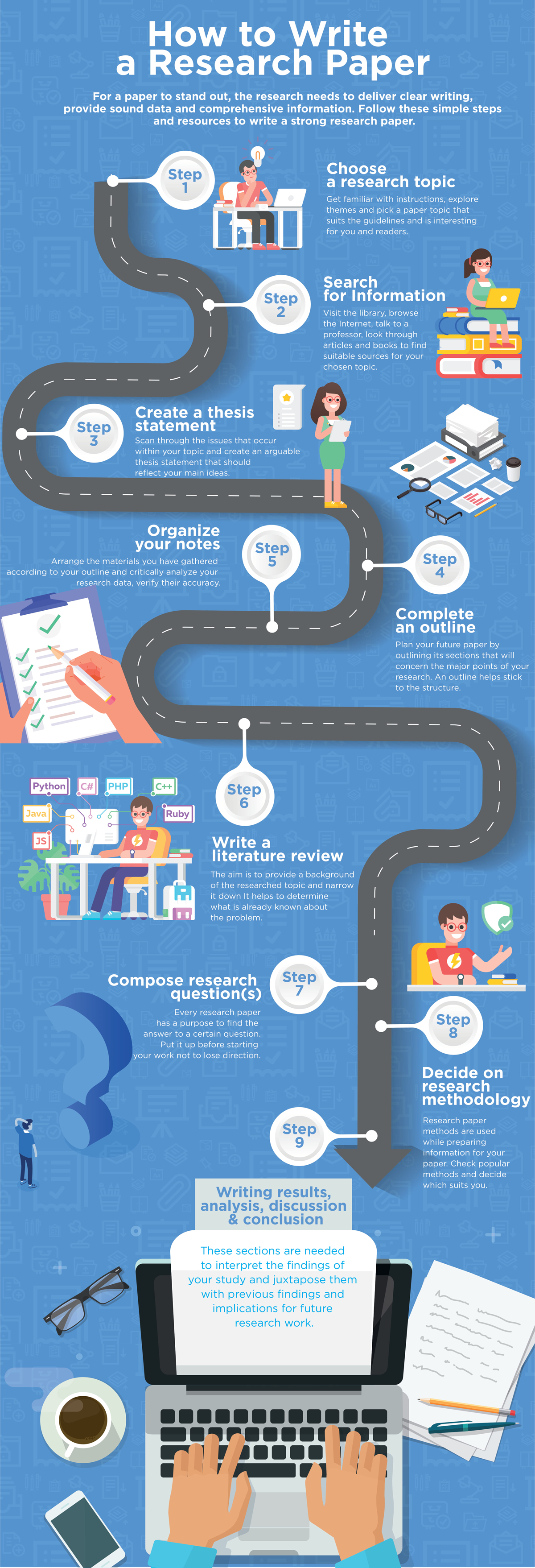
An explanation will be useful in relating the results together instead of just providing the reader with inaccessible and unrelated numbers and charts.
9. Argument/ Discussion
This is where the study results are interpreted and assessed against the current research works. There are numerous ways to write the argument part of your research paper, but the section must emphasize on four major elements;
- Justifications: what is the meaning of the research?
- Implications: why do the findings matter?
- Limitations: What are the findings that we are unable to tell us?
- References: what are some scientific studies and practical actions you think should follow your study?
In some cases, the results and discussion sections are included in the same chapter. The discussion section allows you to discover your research’s fundamental meaning.
Things You Should Not Do While Writing the Discussion
- Don’t Retell Your Findings
You can open the discussion with a brief statement about the main conclusion, but make sure that is all; stop right there. You already have a different findings section in your research paper. Don’t repeat yourself by clarifying the results again; instead of doing that, just quickly switch to their significance and impact.
2. Avoid Using Too Much Jargon
Most likely, your target readers will be familiar with the jargon, but you should reduce its use to make your paper reachable to a broader audience and give a more significant impact. This way, you will be expanding your target readership.
3. Don’t Introduce a New Piece of Data
Adding a new piece of data only makes the argument more confusing. Ensure that all your data are presented in the results or findings section.
10. Conclusion
Writing a good conclusion for your research paper can be difficult. The conclusion part of your research paper should be perfect and sum up your entire study without sounding repetitive.
When writing your conclusion, please think of the main point you want to highlight and include it. Here are some tips that will help you write a good conclusion:
- Use your introduction as a guide
- Take a look at every paragraph of your paper
- Leave your target readers with something to contemplate about
11. References
In this section, you must include a clear reference to recognize the work of previous researchers in your field and give reliability to your study.
12. Appendices
This section contains additional material that isn’t a part of the text but might help offer a more detailed understanding of the research problem. Writing an appendix is simple as long as you know the various formats and guidelines.
Bottom Line
Writing an academic paper can be easy when you follow the above guide. But remember that you need enough time to write your research paper, and you cannot just take some random sources and try to come up with something.
However, sometimes, the given topic can be difficult, or you may not be confident enough to ace your research paper. At DoMyPaperNow, we provide 100% original research papers at reasonable prices.
Tips for Writing a Successful College Research Paper
- Start Early: Research papers take time, so begin researching and outlining early to avoid last-minute stress.
- Organize Your Research: Use digital tools like reference managers (e.g., EndNote, Mendeley) to organize your sources.
- Follow Formatting Guidelines: Be meticulous about formatting (APA, MLA, etc.), which can affect your grade.
- Revise Thoroughly: Editing and proofreading your paper are essential to catch errors and ensure clarity.
Conclusion
Understanding the structure of a college research paper is the key to delivering a well-organized and academically sound document. Each part, from the title page to the appendices, is critical in conveying your research effectively. By following the guidelines for each section and seeking help when needed, you can ensure that your research paper is thorough, clear, and impactful.